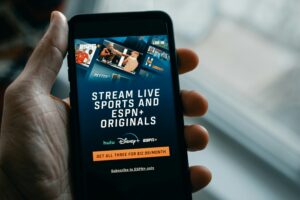
The balance of power in 2025 sports media is shifting from traditional cable bundles to direct‑to‑consumer streaming platforms—and has been for the last few years. It is forcing leagues and teams to rethink what their media rights are really worth. Cord‑cutting has steadily eroded the cable subscriber base, and with it, the certainty of long‑term carriage fees that underpinned franchise valuations for decades. At the same time, tech companies and streaming giants are selectively bidding on premium rights, creating a fragmented but lucrative new marketplace for top‑tier events.
Rights packages that once lived under a single network umbrella are now split across multiple platforms, complicating fan access but expanding overall revenue potential. Instead of selling exclusivity to one broadcaster, leagues increasingly carve out separate windows and digital rights, from alternate feeds to international packages. For rights holders, this offers more levers to pull, but also raises the risk of over‑segmenting the audience and driving casual viewers away.
Consider:
- Netflix aired Christmas Day NFL coverage
- Prime Video has Thursday Night NFL and Monday Night Hockey coverage
- Apple TV has Friday Night Baseball and MLS coverage
- Netflix and Dazn battle for combat sports
The list goes on. And that’s not counting pay-per-view options like ESPN+.
Speaking of ESPN, they recently introduced their new MNF Playbook with Next Gen stats. It’s a signal that networks are competing to earn fan loyalty through this investment of capital into developing a richer experience.
New Economics Of Sports Streaming: Leagues Betting Big On Direct-To-Consumer
Leagues are investing heavily in their own direct‑to‑consumer (DTC) products to reduce dependence on any single broadcaster. Owning the customer relationship, and especially the first‑party data that comes with it, has become as strategically valuable as the rights fees themselves. With robust DTC platforms, a league gains more control over pricing, packaging, and personalization, building a long‑term digital asset that can survive future distribution shifts.
At the same time, league‑owned apps allow experimentation with formats that linear partners might resist. Multiple camera angles, betting‑integrated streams, and creator‑led alternate broadcasts can all live side‑by‑side within a DTC environment. For younger fans accustomed to interactive and on‑demand content, this type of tailored experience is increasingly the baseline expectation. The challenge is convincing them to pay for another subscription in an already crowded streaming wallet.
Subscriptions And Fan Backlash
As more games migrate behind paywalls, fans are encountering a confusing and expensive patchwork of subscriptions. A single team’s season can span national networks, regional sports channels, and multiple streaming apps, each with its own login and fee. This complexity risks turning even die‑hard supporters into frustrated cord‑cutters who resort to highlights and social clips instead of full‑game viewing. Discovery‑friendly coverage that clearly explains where and how to watch has become a valuable service in its own right.
Teams and leagues know that long‑term growth depends on reach, especially among younger and more casual fans. Some have begun to reserve portions of their schedule for free‑to‑air or widely available platforms, treating them as top‑of‑funnel marketing for their premium products. Others are experimenting with flexible pricing, such as selling single‑game passes or micro‑bundles of marquee matchups, to lower the barrier to entry. How well they manage this balance between revenue and reach will shape fan loyalty for years.
Betting, Data, And The Next Revenue Frontier
Legal sports betting and real‑time data integrations are creating new commercial layers on top of live rights. Leagues are striking partnerships that blend official data feeds with betting markets, allowing in‑game wagers that react to every pitch, possession, or drive. For broadcasters and streamers, this opens inventory for sponsorships, in‑stream odds displays, and targeted promotions tied to live events. When executed carefully, these features can deepen engagement rather than distract from the core viewing experience.
The rise of betting‑adjacent content also offers additional programming windows beyond the games themselves. Pre‑game betting shows, odds‑driven analysis segments, and creator‑led live watch‑alongs give rights holders more opportunities to monetize attention. However, regulators and leagues face mounting pressure to establish guardrails around advertising saturation and consumer protection. Maintaining trust will be essential to keeping these new revenue streams politically and socially sustainable.
What 2026 Means For Teams, Brands, And Fans
For teams, media disruption presents both risk and opportunity. Those in large markets or with national followings can command premium exposure across multiple platforms, while smaller clubs may struggle to secure favorable distribution. Smart organizations are investing in in‑house content teams, social media strategies, and data capabilities to ensure they are not solely reliant on league‑wide deals. In an era where every franchise is also a media company, the quality and consistency of output can influence sponsorship value.
Brands that historically focused on linear TV placements are recalibrating their sports strategies to match new consumption behaviors. Contextual integrations, shoppable video, and creator partnerships around tentpole events are becoming as important as traditional in‑game spots. Meanwhile, measurement challenges persist as impressions scatter across devices and platforms, pushing advertisers toward solutions that unify linear and digital attribution. Those that adapt early will secure more efficient reach while competitors chase legacy metrics.
For fans, 2026 will likely feel like a transitional year in which convenience and cost are still catching up to the promise of streaming. The best outcomes will come where stakeholders prioritize simplicity—clear communication, intuitive apps, and reasonably priced tiers that respect both superfans and casual viewers. The leagues and platforms that solve for fan experience, rather than just short‑term monetization, will be the ones most strongly positioned for the next decade of sports media.