
On January 20, 2026—exactly one year into Donald Trump’s second term—POLITICO Magazine published a provocative piece examining the long-term historical impact of the 47th president. Authored by John F. Harris, POLITICO’s founding editor and global editor-in-chief, the article argues that Donald Trump’s influence will extend far beyond his constitutional limits, effectively granting him a metaphorical “third term” via the persistent shadow of Trumpism on American politics, government, and global relations.
Titled “President Donald Trump Will Get a Third Term Even Without Defying the Constitution,” the essay casts Donald Trump as the dominant political figure of the early 21st century, with implications that could outlast his presidency ending in January 2029.
Donald Trump’s Projected Dominance: 14 Years and Counting
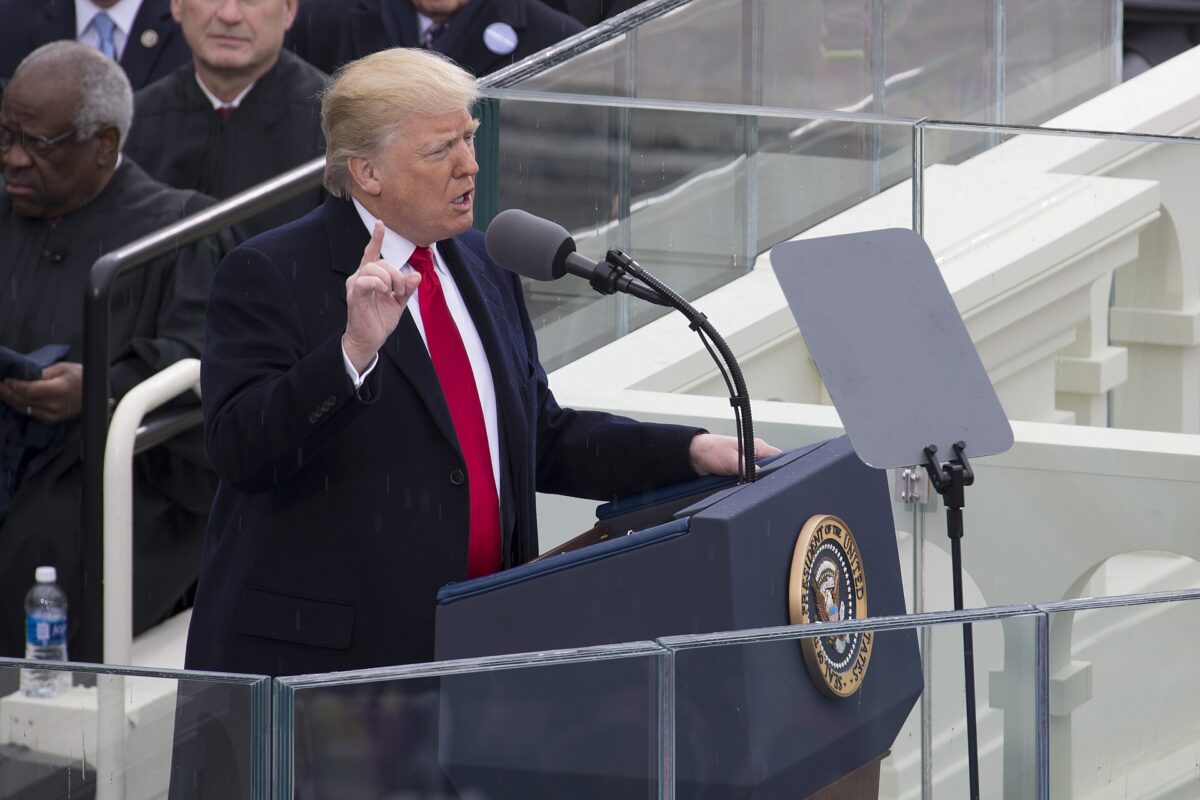
Harris highlights that, assuming Donald Trump completes his full second term, he will have shaped American politics for 14 years—surpassing Franklin D. Roosevelt’s 12-year span as the defining figure of the 20th century. Trump’s second term, beginning with his January 20, 2025, inauguration where he declared he was “saved by God to make America great again,” has already delivered on promises of radical change.
The author points to concrete policy shifts as evidence of profound transformation:
- Halting undocumented border crossings through aggressive enforcement.
- Implementing protectionist tariffs and subordinating free markets to centralized economic decisions.
- Forcing tech titans and billionaires to seek favor through public displays of loyalty.
- Restoring Confederate-named military bases (reversed under Biden) and symbolic renamings like the “Gulf of America” or “Department of War.”
- Plans for ambitious structures, including the controversial “Arc de Donald Trump” near Arlington National Cemetery.
These moves, combined with an “incendiary” political style, have made Donald Trump more radical and less constrained than even critics anticipated.
The ‘Third Term’ Thesis: Trumpism Shadows the Next President
The core argument is that Trumpism—a blend of grievances, nationalism, protectionism, and expanded executive authority—will force the next president (potentially a Democrat in 2029) to campaign and govern in its shadow. Harris predicts successors will struggle to fully escape or dismantle it without partial co-optation.
Historical parallels illustrate the point:
- Dwight Eisenhower accepted key elements of the New Deal in the 1950s rather than fighting to undo it.
- Tony Blair in 1997 embraced aspects of Thatcher/Reagan economics (“There were certain things the 1980s got right, an emphasis on enterprise, more flexible labor markets. Fine, accepted.”) before shifting to progressive priorities.
Trumpism, however, is described as uniquely difficult to end due to its personality-driven nature and an “infected” political culture. Opponents may focus on symbolic restorations (e.g., renaming buildings or replanting Rose Garden grass) or substantive policy reversals, but the movement’s core ideas—especially Trump’s theory of broad presidential power—will likely endure.
The Lasting Precedent: Expanded Executive Power
One of the most enduring aspects of Trump’s legacy, per Harris, is his redefinition of presidential authority. Remedies are limited to impeachment or electoral defeat, and successors of both parties are expected to preserve and wield this expanded power. What was once deemed “not normal” has become normalized.
The piece references Harris’s earlier column (“Time to Admit It: Donald Trump is a Great President”) to frame Trump as “great” in a consequential, objective sense—profoundly altering government and international relations—regardless of normative judgments.
Short-Term vs. Long-Term Historical View
- Short-term (e.g., the 2028 election): Democratic candidates will be forced to address Trump’s legacy, with some backward-looking pledges (restoring symbols) and others forward-focused but still reactive.
- Long-term: Trump’s arguments and movement “will long outlast Donald Trump,” cementing his place among presidents who reshaped the nation. His era tests democracy’s limits, with lasting effects on executive norms, trade policy, geopolitics, and political culture
As the 2026 midterm cycle looms and global events unfold (including Donald Trump’s foreign policy moves like Venezuela interventions), this POLITICO analysis underscores a key question: Can America move beyond the “Trump Moment,” or will his imprint define generations?
For the full piece, check out POLITICO Magazine’s January 20, 2026, edition. The legacy debate is only beginning.
For More Sports And Politics Content:
At the intersection of the playing field and the corridors of power, the stakes are always higher than they appear. Here, touchdowns and treaties, contracts and caucuses, victories and vendettas all collide. This is where sports stop being just games — and politics stop pretending to be civil. Welcome to Sports & Politics.