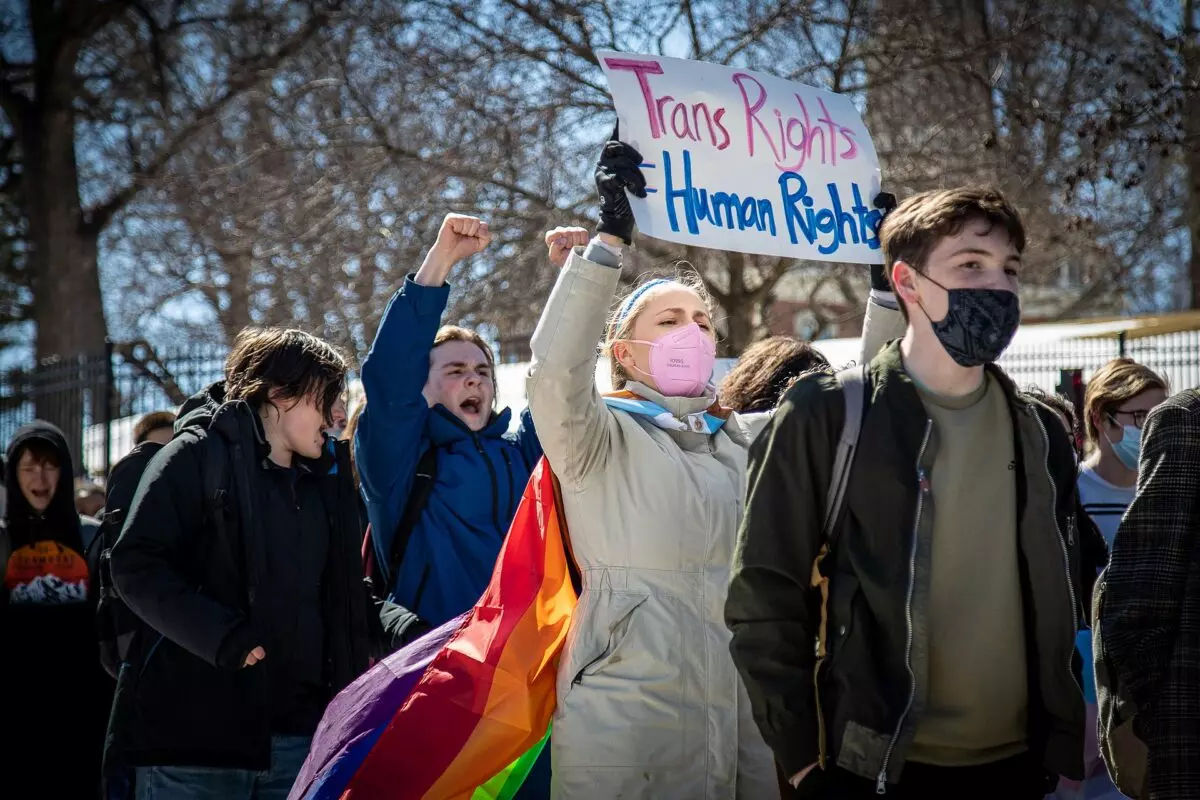
The U.S. Supreme Court heard over three hours of oral arguments on January 13, 2026, in two consolidated cases challenging state laws banning transgender girls and women from participating in girls’ and women’s sports teams at public schools and colleges.
The cases are West Virginia State Board of Education v. B.P.J. (involving high school sophomore Becky Pepper-Jackson) and Little v. Hecox (involving Boise State University senior Lindsay Hecox). Both laws require participation based on biological sex assigned at birth.
A decision is expected by late June or early July 2026, potentially affecting similar bans in 27 states.
Key Cases and Background For The Supreme Court

- West Virginia case: Pepper-Jackson, a transgender girl who began transitioning in third grade and takes puberty blockers/hormone therapy, challenged the state’s “Save Women’s Sports Act” after being barred from her middle school girls’ cross-country team at age 11. Lower courts blocked enforcement against her, citing no competitive advantage due to her treatments. She placed third in discus and eighth in shot put as a freshman.
- Idaho case: Hecox, a transgender woman at Boise State, challenged a similar ban. She sought to drop her case before arguments (focusing on graduation), but Idaho argued it was too late. A federal judge blocked enforcement, citing her hormone treatments eliminating any advantage.
Main Arguments from Both Sides At Supreme Court
Challengers (ACLU lawyers Joshua Block for West Virginia, Kathleen Hartnett for Idaho): The laws discriminate based on sex and transgender status, violating the Equal Protection Clause (requiring valid reasons for differential treatment) and Title IX (prohibiting sex discrimination in federally funded education programs). They argue bans isolate trans youth, deny equal opportunities, and ignore individual circumstances (e.g., hormone therapy reducing advantages). Block urged remanding for factual review rather than a broad ruling.
States (Idaho Solicitor General Alan Hurst, West Virginia’s Michael Williams) and Trump Administration (Principal Deputy Solicitor General Hashim Mooppan): Biological differences (size, muscle mass, bone density, heart/lung capacity) justify separation to ensure fairness and safety in women’s sports. No dispute on scientific basis for sex-separated teams; transgender participation undermines Title IX’s 50-year progress for cisgender women/girls. Mooppan: “Male athletes who take performance-altering drugs are not similarly situated to female athletes.”
Justices’ Questions and Leanings At Supreme Court
The conservative majority (6-3) appeared inclined to uphold the bans, emphasizing fairness in women’s sports and Title IX protections. Liberals pushed for individual assessments.
- Chief Justice Roberts: Questioned flexibility in defining “sex” beyond biology.
- Justice Kavanaugh: Asked why the Court should impose a nationwide rule amid ongoing debate and uncertainty; noted harm to women’s sports if trans participation allowed.
- Justice Alito: Asked if opposing female athletes are “bigots” or “deluded”; room fell silent; frowned and avoided eye contact during response.
- Justice Barrett: Warned delving into “similarly situated” arguments opens a “huge can of worms.”
- Justice Sotomayor: Pressed on requiring matching reasons for sex distinctions; noted scientific disputes.
- Justice Kagan: Concerned about rulings preventing states from including trans athletes.
- Justice Gorsuch: Asked about historical discrimination against trans people; lighthearted exchange on expertise.
Notable moments: Laughter when Gorsuch joked about lacking Ph.D. credentials; silence during Alito’s “bigots” question.
Supreme Court Current Status and Reactions
Arguments concluded after three hours. No immediate decision; Court deferred on Idaho mootness. Conservatives signaled sympathy for state laws; liberals urged narrow rulings. Protests outside included both supporters and opponents of bans.
Experts predict a conservative ruling upholding bans, potentially remanding for more facts or avoiding broad precedent. The Trump administration sided with states, echoing executive orders restricting trans participation.
This case could reshape transgender rights in education/sports nationwide.
For More Sports And Politics Content:
At the intersection of the playing field and the corridors of power, the stakes are always higher than they appear. Here, touchdowns and treaties, contracts and caucuses, victories and vendettas all collide. This is where sports stop being just games — and politics stop pretending to be civil. Welcome to Sports & Politics.